About
The Strange group leverages the unique capabilities of X-ray and neutron scattering techniques to solve complex problems traversing topics in fundamental and applied research areas. These types of measurements typically involve in situ/operando measurement conditions in order to derive structure-property-performance relationships of materials. Design and fabrication of novel sample environments and capabilities is a core strength of our group in order to push the boundaries of existing structure and dynamics characterization techniques.
Using these advanced characterization methods, we are largely interested in understanding and mitigating barriers associated with developing processes and technologies for energy sustainability, which include hydrogen production, storage, and associated infrastructure, as well as carbon capture and management.
At a more fundamental level, we are interested in gas-solid and fluid-solid interactions across length scales which dictate mechanisms of gas capture, storage, and separations processes. We obtain hierarchical depictions of these processes by co-utilization of thermodynamic (macroscopic), through volumetric adsorption, and structural (atomic and molecular scale), X-ray scattering and spectroscopy, measurements. Of particular interest is understanding the effects of confinement and dimensionality on adsorption processes (i.e., evolution of adsorption on ideal quasi-two-dimensional substrates to adsorption within a three-dimensional porous sorbent).
Stanford Synchrotron Radiation Lightsource (SSRL)
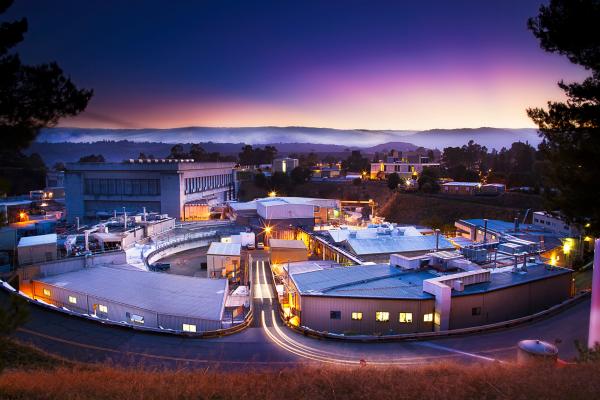
The Strange group is a part of the Materials Sciences - Hard X-ray Division within the Stanford Synchrotron Radiation Lightsource (SSRL) directorate at SLAC National Accelerator Laboratory. Many of the group capabilities were developed specifically for use at SSRL and are intended to support the user program in addition to externally funded research projects.
We are always looking for new challenges and are open to collaborations focused on designing and implementing novel sample environments/beam line capabilities to solve complex scientific problems and address research needs.


